

I have a very specific memory of drinking a mango smoothie on a beach in Thailand, watching the sun set, with absolutely nowhere to be. I also have a very specific memory of my current life, which involves a kitchen, a slightly too-warm apartment, and a commute. But here’s the thing — the gap between those two realities is smaller than you think when you have the right tropical smoothie recipe.
One blender, six ingredients, five minutes, and you’re there. Not literally there. But emotionally there, which honestly counts for a lot on a Tuesday morning.
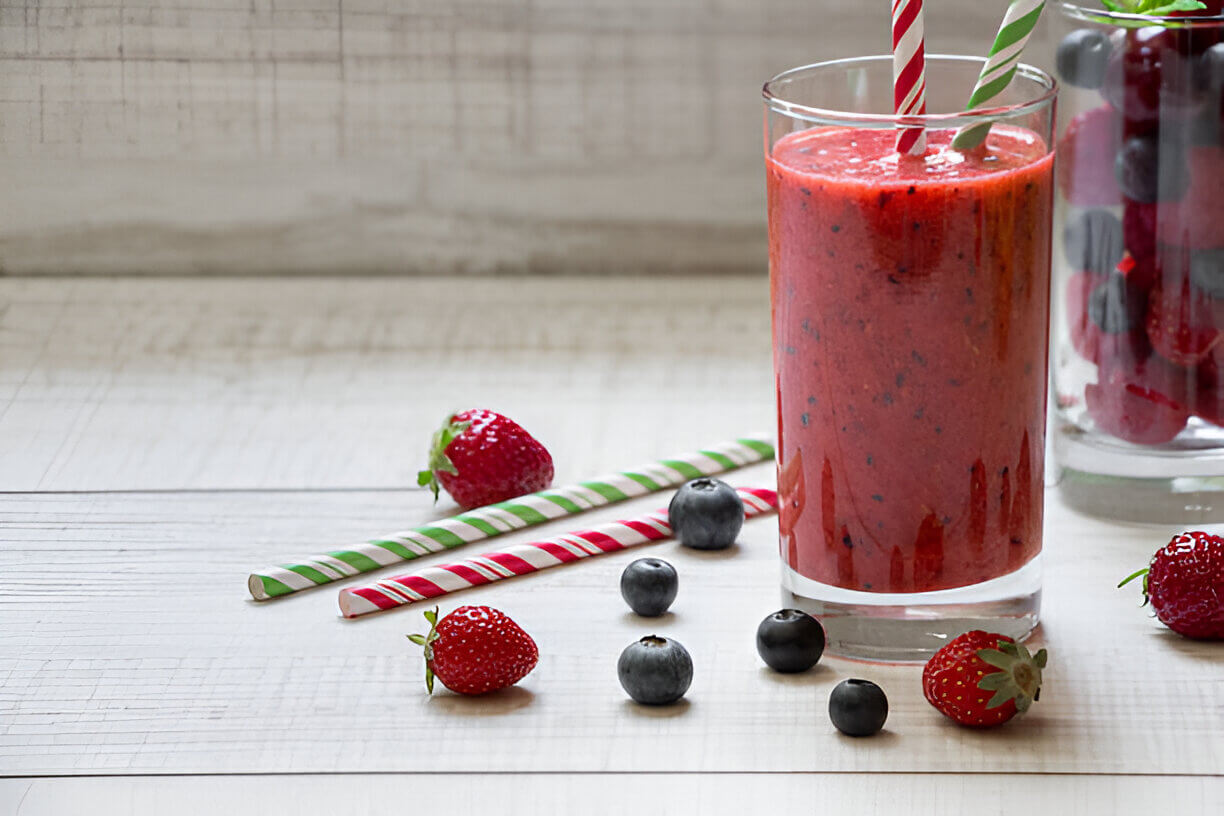
This is the tropical smoothie I make on repeat — thick, fruity, creamy, and absolutely loaded with mango, pineapple, and coconut. Plus five variations to keep things interesting, the tools that make it happen effortlessly, and one life-changing tip about frozen fruit that will upgrade every smoothie you ever make.


What Makes a Tropical Smoothie Actually Taste Tropical?
Not all tropical smoothies earn the name. Some taste like watered-down fruit punch. Some taste like they’re trying too hard. The good ones — the ones that transport you — hit three notes at once:
Sweetness from ripe tropical fruit (mango, pineapple, banana). Creaminess from coconut milk or yogurt. Brightness from a squeeze of lime or a splash of orange juice that ties everything together.
Nail all three and you have a smoothie that tastes like something you’d pay $12 for at a resort. Miss one and it’s just fruit in a cup.
The other non-negotiable: frozen fruit. Fresh tropical fruit makes a thin, lukewarm disappointment. Frozen mango and frozen pineapple make a thick, frosty, ice-cream-adjacent situation that’s genuinely hard to put down. Freeze your own or buy pre-frozen bags — both work perfectly.
The Classic Tropical Smoothie Recipe
🛒 What You’ll Need (Serves 2)
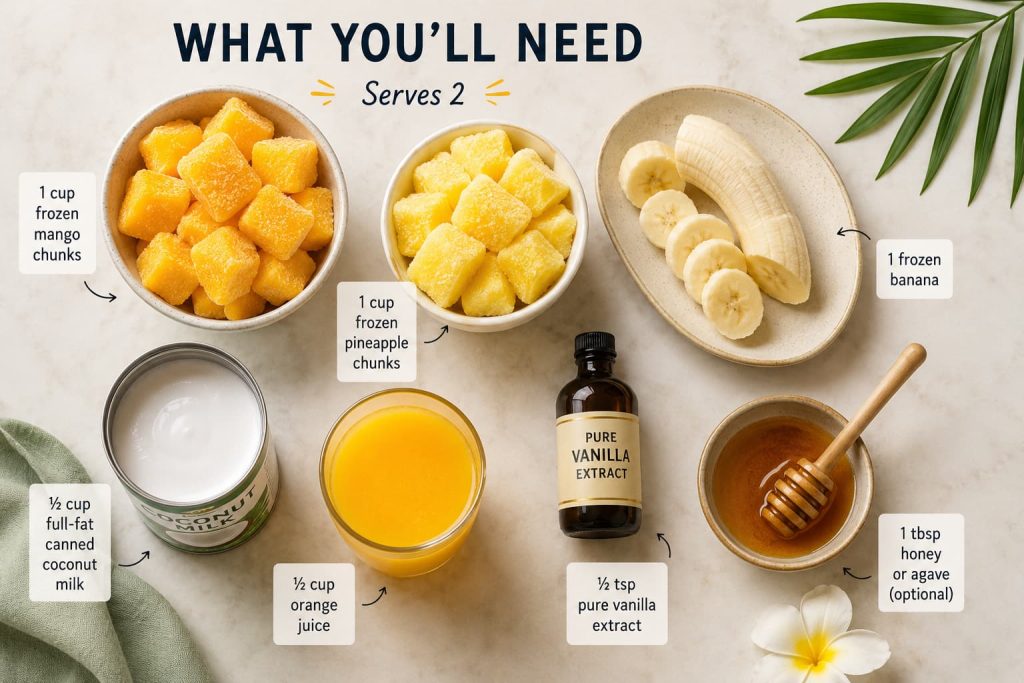
- 1 cup frozen mango chunks — the bold, sweet backbone
- 1 cup frozen pineapple chunks — tangy, tropical brightness
- 1 frozen banana — creamy texture and natural sweetness
- ½ cup full-fat canned coconut milk — do not skip this
- ½ cup orange juice — adds citrusy lift and thins it perfectly
- ½ tsp pure vanilla extract — sounds minor, makes a huge difference
- 1 tbsp honey or agave — optional, taste first
How to Make It
Step 1
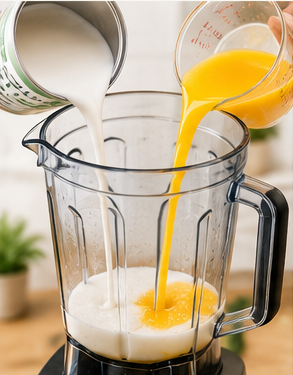
Add your liquids first — coconut milk and orange juice into the blender. This protects your blender motor and helps everything blend faster and smoother.
Step 2
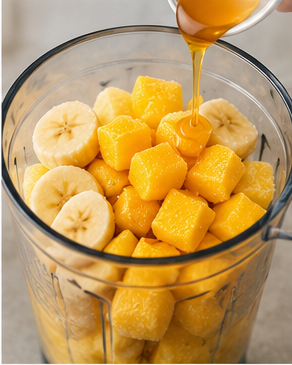
Add the frozen banana, frozen mango, and frozen pineapple on top. Add the vanilla extract and honey if using.
Step 3
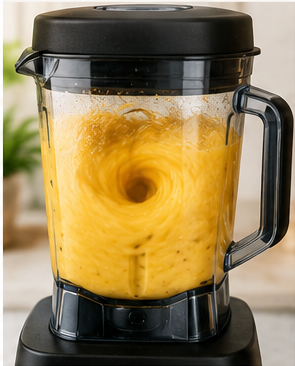
Blend starting on low, then increase to high. Blend for 45–60 seconds until completely smooth and thick. Use a tamper if your blender has one to push the frozen fruit toward the blades.
Step 4
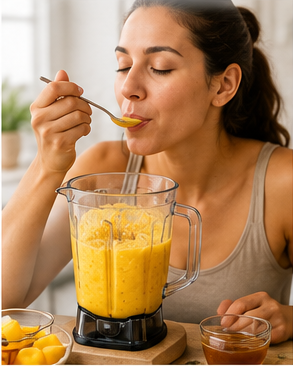
Taste and adjust — more honey for sweetness, more OJ if too thick, more frozen mango if you want it bolder.
Step 5
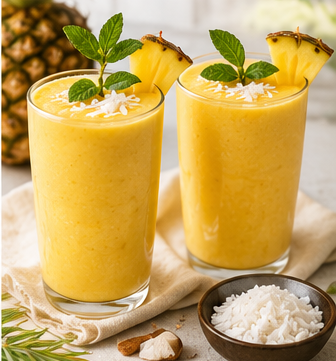
Pour into two glasses and immediately garnish with a pineapple wedge, a sprig of mint, or a sprinkle of shredded coconut. Serve immediately.
5 Tropical Smoothie Variations That Deserve Their Own Fan Club
The base recipe is excellent. These twists are arguably even better:
💚 Island Green (Tropical Smoothie Cafe Copycat)
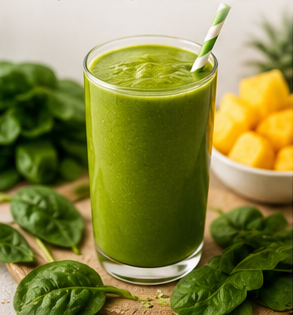
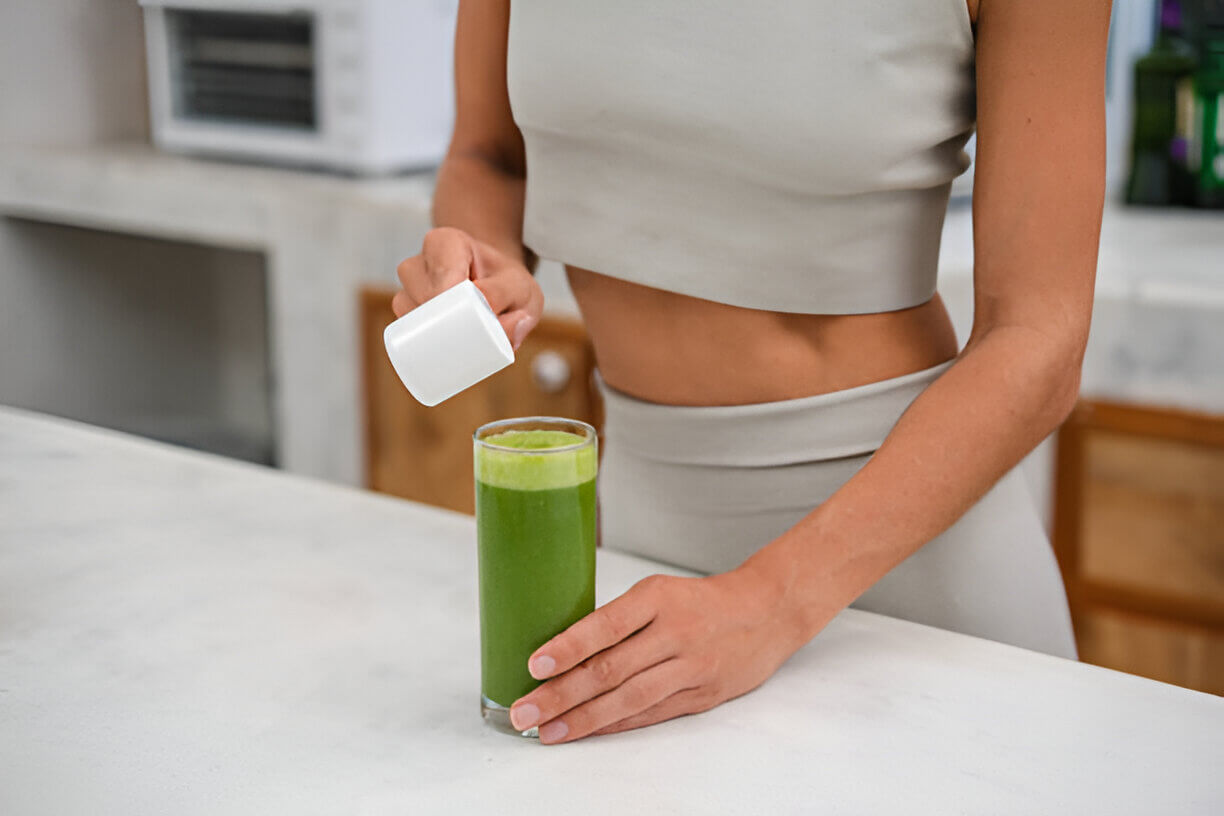
Add 1 cup of fresh spinach or kale to the base recipe. You literally will not taste it — the mango and pineapple completely dominate. But you’ll get iron, vitamin K, and antioxidants smuggled into every sip. This is the version I make 4 days a week. IMO the green version is the move if you’re using this as a real health tool.
🥑 Creamy Tropical Avocado Smoothie
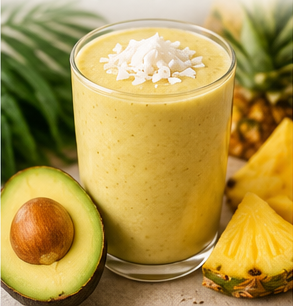
Add ½ a ripe avocado before blending. The texture becomes almost silky-pudding-like, the healthy fats keep you full for hours, and the flavor stays tropical. This one works perfectly as a full breakfast.
🍓 Strawberry Mango Tropical Blend
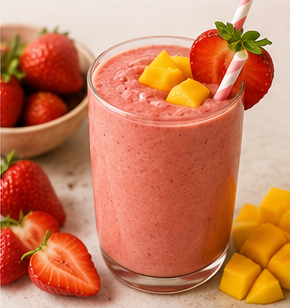
Swap the pineapple for frozen strawberries. Still tropical, but pinker and slightly more tart. Great for anyone who finds pineapple too intense.
🫚 Tropical Protein Power Smoothie
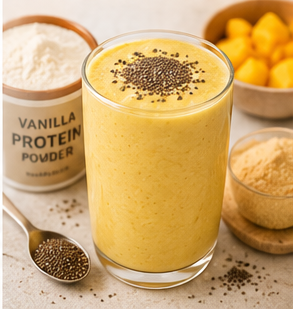
Add a scoop of vanilla protein powder and a tablespoon of chia seeds. Turns this smoothie into a macro-balanced meal — roughly 25–30g protein, plenty of fiber, and all the tropical flavor intact. Perfect post-workout fuel.
🥥 Extra Coconut Tropical Dream
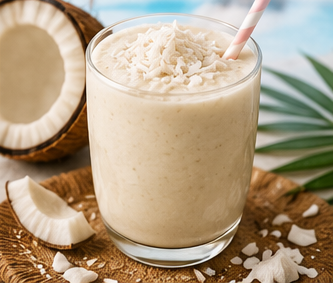
Use coconut water instead of orange juice, add a tablespoon of shredded unsweetened coconut, and increase the coconut milk to ¾ cup. Maximum coconut energy. Pairs perfectly with absolute silence and a closed laptop.
🛒 The Tools That Actually Make the Difference
The tropical smoothie is only as good as your blender. Frozen mango and pineapple are dense, and an underpowered blender will leave you with chunks — which ruins the whole vibe. Here’s what’s worth having:
Best Overall — Vitamix Explorian E310 (Amazon)
The gold standard for smoothie-makers. A 2 HP motor handles frozen tropical fruit like it’s room temperature, a 5-year warranty, and it self-cleans in 60 seconds. If smoothies are a real part of your lifestyle, the Vitamix pays for itself fast.
Best Mid-Range — Ninja BL660 Professional Blender (Amazon)
1100 watts of crushing power, two 16oz to-go cups included, and over 92,000 five-star Amazon reviews. This is the sweet spot for most home smoothie makers — powerful enough to handle dense frozen fruit, affordable enough not to require a financial decision.
Best Personal/On-the-Go — NutriBullet Personal Blender 600W (Amazon)
Compact, fast, and blends right in the cup. If your tropical smoothie is a morning solo situation and you need it done and out the door in 90 seconds, the NutriBullet is your answer.
Best Flavored Syrups — Torani Flavored Syrup Variety Pack (Amazon)
Want to add a caramel drizzle to your coconut tropical smoothie, or experiment with passion fruit syrup? Torani’s variety pack is a great entry point — the same brand of syrups used by coffee shops and smoothie bars across the country.
This Smoothie Is the Habit. The Plan Is What Makes It Last.
Here’s what I’ve learned after making tropical smoothies for a few years: the smoothie isn’t the hard part. Doing it consistently is.
It’s so easy to make an amazing smoothie three days in a row and then fall off because you don’t know what to make next, or your motivation dips, or you just didn’t buy the right ingredients this week.
That’s exactly the problem the 21-Day Smoothie Plan solves. It’s a complete done-for-you system — 21 days of recipes, shopping lists, and structure — built for people who genuinely want to use smoothies to feel better and don’t want to figure it out day by day.
If you’re making this tropical smoothie because you want a real, lasting change, this is your next step. → Check out the 21-Day Smoothie Plan here
Final Thoughts
The tropical smoothie is the rare recipe that’s both incredibly simple and genuinely special. Five minutes. One blender. Six ingredients. And you have something that actually makes you feel like you’re somewhere else for a moment.
In a chaotic summer, that’s not nothing.
Bookmark this, make the classic version first, then work your way through the variations. And if you want this kind of recipe every single day for 21 days — planned out, shopping list ready, no guesswork — the 21-Day Smoothie Plan is where you go next.
Which variation has your name on it? I’m betting on the Island Green — it converts skeptics every single time.
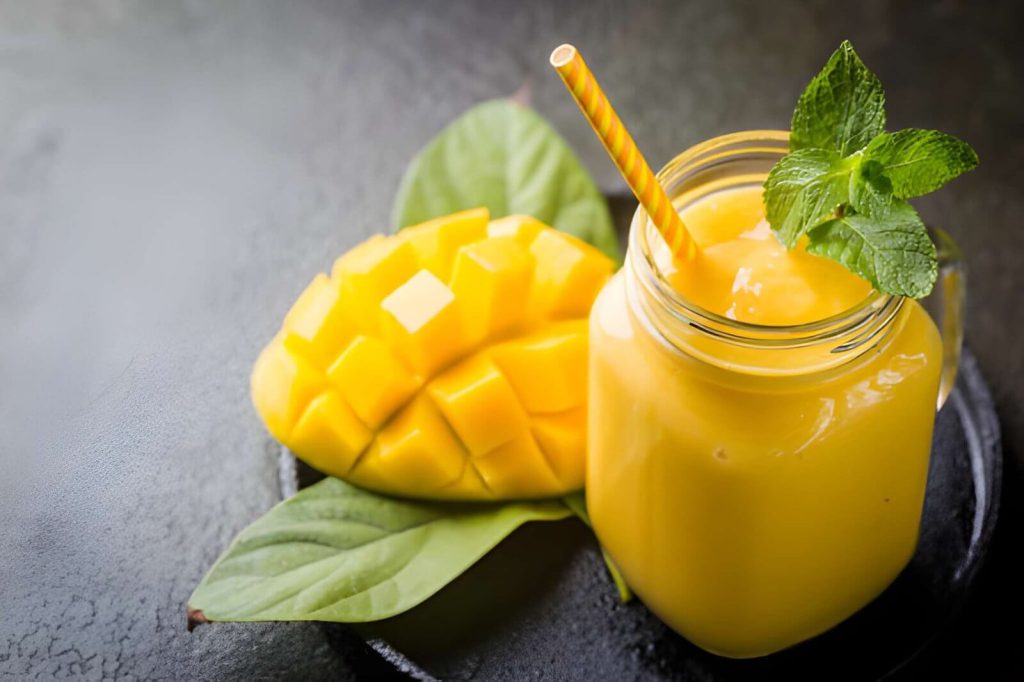

The Tropical Smoothie That Tastes Like a Vacation You Can’t Afford Right Now
Description
This tropical smoothie is thick, creamy, and bursting with mango, pineapple, and coconut flavor. It’s the perfect balance of natural sweetness, citrus brightness, and silky texture—ready in just minutes. Whether you need a quick breakfast, a post-workout refuel, or a refreshing summer drink, this smoothie delivers a mini vacation in every sip.
Ingredients
Instructions
-
-
Add coconut milk and orange juice to the blender.
-
Add coconut milk and orange juice to the blender.
-
Blend from low to high for 45–60 seconds until smooth.
-
Adjust thickness or sweetness if needed.
-
Pour into glasses, garnish, and serve immediately.
Nutrition Facts
Servings 2
- Amount Per Serving
- Calories 260kcal
- % Daily Value *
- Total Fat 8g13%
- Total Carbohydrate 40g14%
- Dietary Fiber 6g24%
- Sugars 28g
- Protein 3g6%
* Percent Daily Values are based on a 2,000 calorie diet. Your daily value may be higher or lower depending on your calorie needs.
