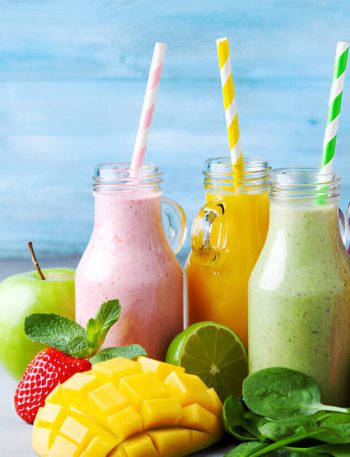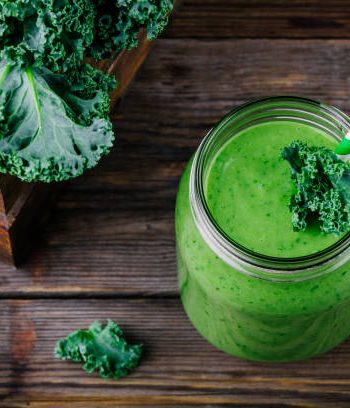
Let me be upfront about something: I’ve tried a lot of “weight loss smoothies” that were basically fruit juice with a wellness label on them. You drink 600 calories of banana, mango, and orange juice, call it healthy, and then wonder why you’re hungry again 45 minutes later and your jeans still don’t fit right.
Real weight loss smoothies — the kind that actually move the needle — work completely differently. They’re not about drinking less. They’re about drinking smarter. High protein to preserve muscle and crush hunger. Loads of fiber to slow digestion and keep you satisfied. Healthy fats that signal your brain to stop looking for the next meal. And real, whole-food ingredients that your metabolism can actually work with instead of just storing.
These 12 recipes are the ones I’ve tested, tweaked, and actually used during stretches where I was trying to lose weight without losing my mind or my enjoyment of food. Each one is genuinely filling, genuinely low in the things that work against you (added sugar, processed ingredients, empty calories), and genuinely delicious — because if you don’t enjoy what you’re drinking, you won’t drink it tomorrow, and the habit dies before it even starts.
Here’s your weight loss smoothie arsenal. Let’s go.
Why Smoothies Make Weight Loss So Much Easier
Here’s the honest case for using smoothies as a weight loss tool — not hype, just what actually works.
They make calorie control effortless. Measuring ingredients once is much simpler than tracking a full cooked meal. A smoothie built from this list is 250–400 calories of dense nutrition — you know exactly what you’re getting without turning every meal into a math problem.
High volume, lower calories. A smoothie made with leafy greens, frozen fruit, Greek yogurt, and a tablespoon of seeds can fill a 600ml glass with fewer than 350 calories. The psychological satisfaction of drinking a full, thick glass matters as much as the numbers.
Protein is the secret weapon. Research consistently shows that high-protein meals reduce hunger hormones (ghrelin) and increase satiety hormones (peptide YY) for hours after eating. Every recipe below is engineered to hit at least 15 grams of protein per serving. That’s what separates weight loss smoothies from fruit drinks.
Now — the mistakes that turn smoothies into the opposite of helpful:
- Fruit juice as the base. It doubles your sugar, removes all fiber, and spikes insulin. Use almond milk, coconut water, or plain water instead.
- Too many “healthy” high-calorie additions. Avocado, nut butter, and coconut milk are all genuinely nutritious — but they’re also calorie-dense. One tablespoon of peanut butter is 100 calories. Portion intentionally.
- Not enough protein. A fruit-only smoothie will have you hungry in an hour. Minimum 15 grams of protein per serving for weight loss.
- Drinking alongside meals instead of replacing them. These are meal replacements, not supplements to a full breakfast.
Get these right and smoothies become one of the most effective tools in a weight loss routine.
12 Weight Loss Smoothies That Keep You Full All Morning
1. The Classic Green Protein Smoothie
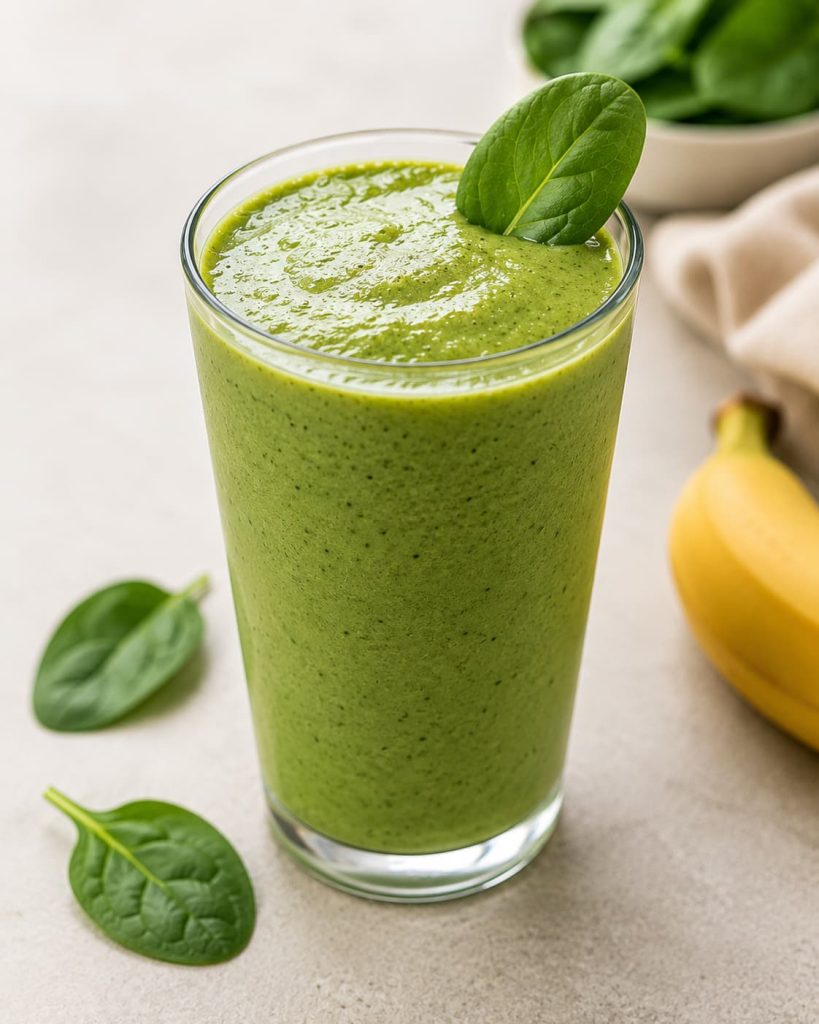
The one that started it all for me. Skeptical about spinach in a smoothie? Do it once. The banana and protein powder dominate so completely that you will not taste a single leaf — but you’ll get iron, magnesium, and a full serving of greens before your morning meeting.
What You’ll Need
- 🥬 2 large handfuls fresh spinach
- 🍌 1 frozen banana
- 💪 1 scoop vanilla protein powder (~20g protein)
- 🥛 1 cup unsweetened almond milk
- 🧊 ½ cup ice
How to Make It
- Pour almond milk into blender.
- Add spinach and blend with milk for 15 seconds.
- Add protein powder, banana chunks, and ice.
- Blend 45–60 seconds on high until silky.
Pro Tip: Blend spinach with the liquid before adding frozen ingredients. It breaks down the leaves more completely and prevents any fibrous bits in the final texture.
Optional Add-Ins: Tablespoon of hemp seeds (extra protein + omega-3s), ½ tsp spirulina for an intensified nutrient profile, pinch of cinnamon to balance sweetness.
Calories + Benefits: ~280 calories, 22–25g protein. Iron and magnesium from spinach, muscle-supporting protein, potassium from banana. A genuine weight-loss workhorse.
2. The Strawberry Greek Yogurt Slimmer
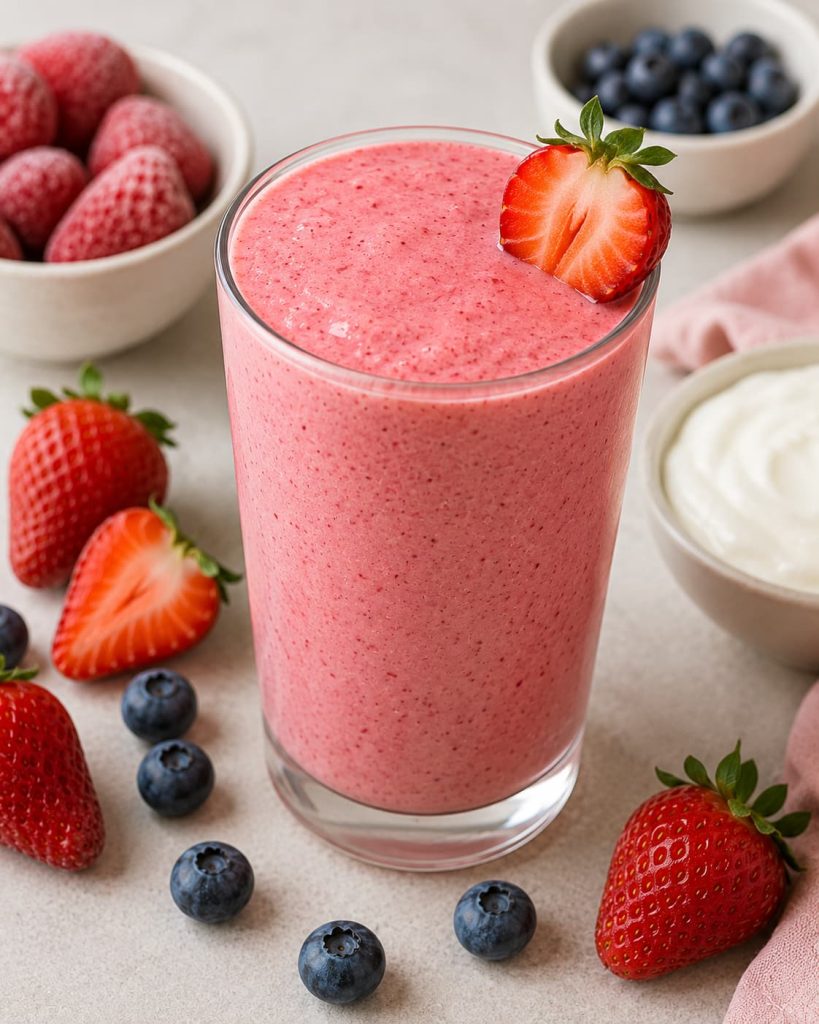
Greek yogurt is one of the most underrated weight-loss foods in existence. A single ¾-cup serving gives you 15–17 grams of protein, live probiotics for gut health, and a creaminess that makes this smoothie taste nothing like diet food. Combined with strawberries’ low sugar density and high fiber content, this one is hard to beat.
What You’ll Need
- 🍓 1.5 cups frozen strawberries
- 🥛 ¾ cup plain Greek yogurt (2%)
- 🥛 ½ cup unsweetened almond milk
- 🌿 ½ tsp vanilla extract
- 🫐 Optional: ¼ cup blueberries
- 🧊 ½ cup ice
How to Make It
- Add almond milk and yogurt to blender.
- Add strawberries, vanilla, and blueberries if using.
- Top with ice and blend 45–60 seconds.
Pro Tip: Use 2% Greek yogurt rather than non-fat. The small amount of fat slows sugar absorption — making this more filling and more metabolically stable than the same recipe made with fat-free yogurt.
Optional Add-Ins: Scoop of vanilla protein powder, tablespoon of chia seeds, a drizzle of honey only if your strawberries are notably tart.
Calories + Benefits: ~250 calories, 18–20g protein. Probiotics for gut health, antioxidants from berries, high protein for satiety. One of the highest protein-to-calorie ratios in this entire list.
3. The Peanut Butter Banana Meal Replacement
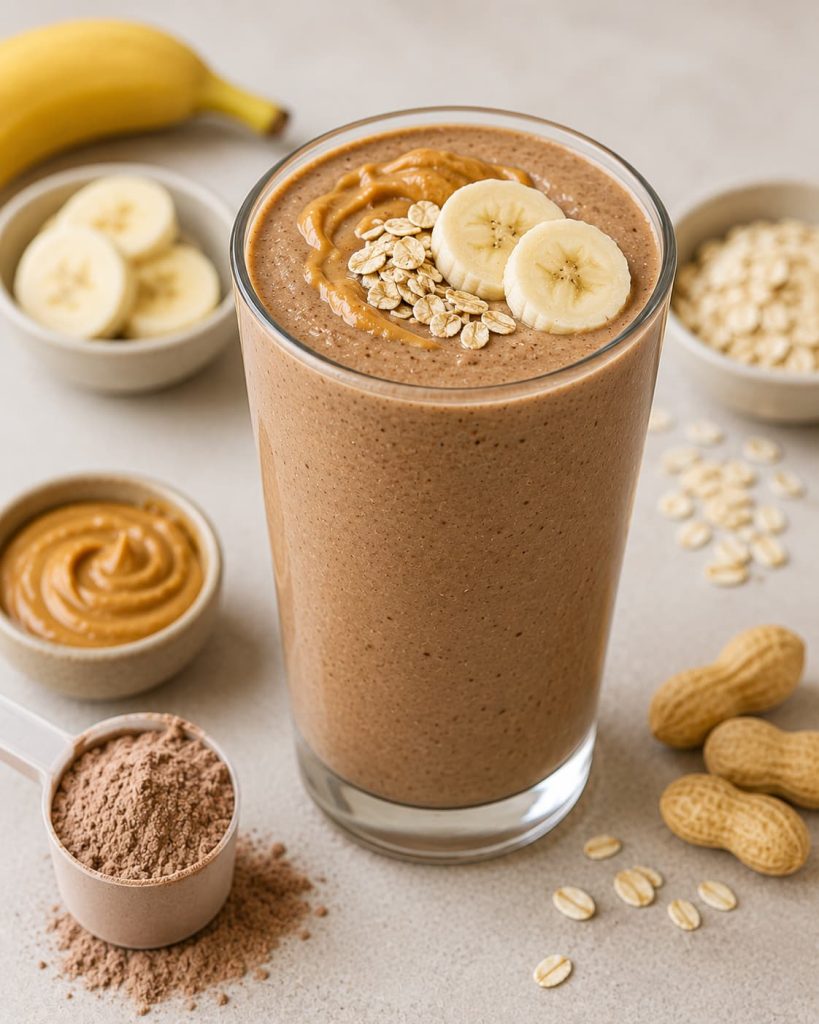
At 400 calories with nearly 30 grams of protein, this isn’t a snack — it’s a full meal. Dense, rich, and completely satisfying. When people tell me they’re always hungry after smoothies, this is the one I send them to. After this, hunger isn’t an issue until well past noon.
What You’ll Need
- 🍌 1 large frozen banana
- 🥜 2 tablespoons natural peanut butter
- 💪 1 scoop chocolate protein powder
- 🥛 1 cup unsweetened almond milk
- 🌾 ¼ cup rolled oats
- 🧊 ½ cup ice
How to Make It
- Add almond milk to blender first.
- Add peanut butter and oats.
- Add protein powder and banana chunks.
- Top with ice and blend 60–90 seconds.
Pro Tip: Add the oats with the liquid and blend for 20 seconds before adding everything else. This pre-processes the fiber and gives you a smooth, non-gritty final texture — huge difference in drinkability.
Optional Add-Ins: Tablespoon of ground flaxseed (extra fiber and omega-3s), pinch of cinnamon, tablespoon of cacao nibs for texture.
Calories + Benefits: ~400 calories, 28–30g protein. Complex carbs from oats and banana for sustained energy, healthy fats from peanut butter for satiety. This is a full, protein-forward meal in a glass.
4. The Raspberry Chia Fat-Burner
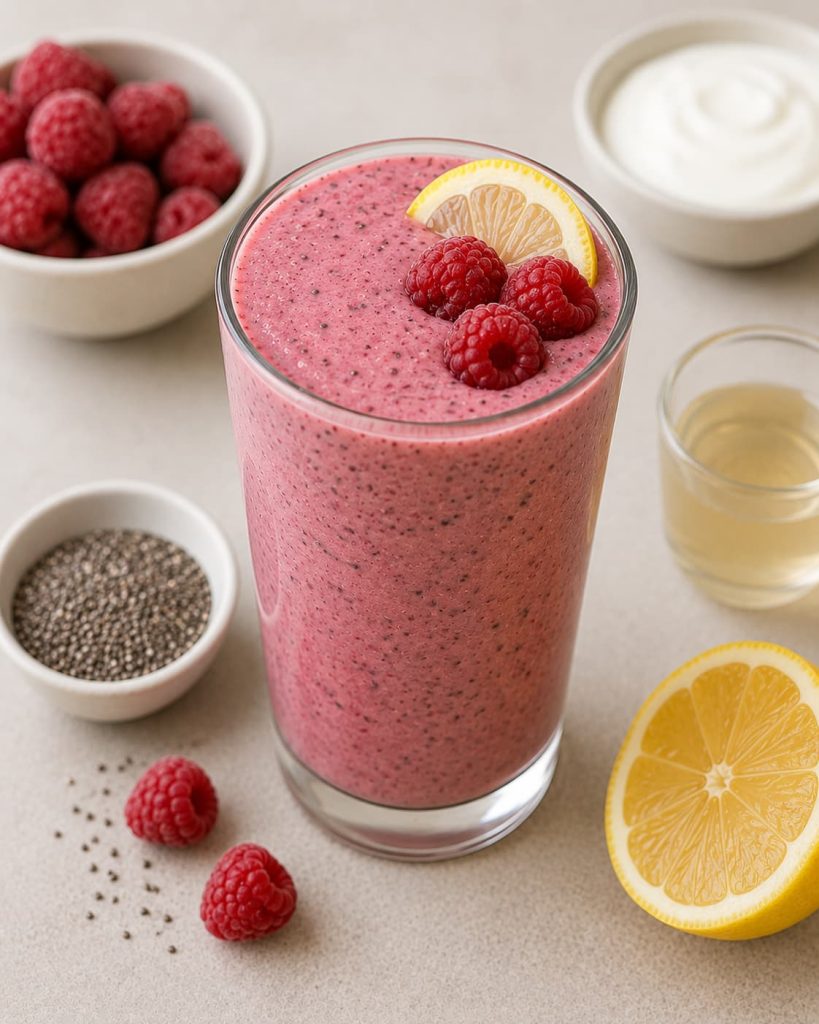
Chia seeds are genuinely extraordinary for weight management. They absorb up to 12x their weight in water, forming a gel in your stomach that extends satiety by hours. In this smoothie, they blend invisibly — you don’t taste them, don’t notice a texture change — but you absolutely feel the difference in how long you stay full.
What You’ll Need
- 🍓 1.5 cups frozen raspberries
- 🫘 2 tablespoons chia seeds
- 🥛 ¾ cup plain Greek yogurt
- 🥛 ½ cup coconut water
- 🍋 Juice of ½ lemon
- 🧊 ½ cup ice
How to Make It
- Add coconut water and yogurt to blender.
- Add chia seeds — blend briefly with liquid before adding frozen ingredients.
- Add raspberries, lemon juice, and ice.
- Blend 60 seconds on high.
Pro Tip: For maximum satiety benefit, soak the chia seeds in the coconut water for 5–10 minutes before blending. The pre-hydrated seeds expand in the blender and disperse more evenly through the smoothie, maximizing the gel-forming effect in your stomach.
Optional Add-Ins: Scoop of vanilla protein powder, handful of spinach (completely undetectable), fresh mint leaves.
Calories + Benefits: ~290 calories, 18g protein. Chia seeds provide 10g of fiber per serving. Raspberries are one of the lowest-sugar, highest-fiber fruits you can blend. Exceptional for blood sugar management and sustained satiety.
5. The Avocado Green Weight Loss Smoothie
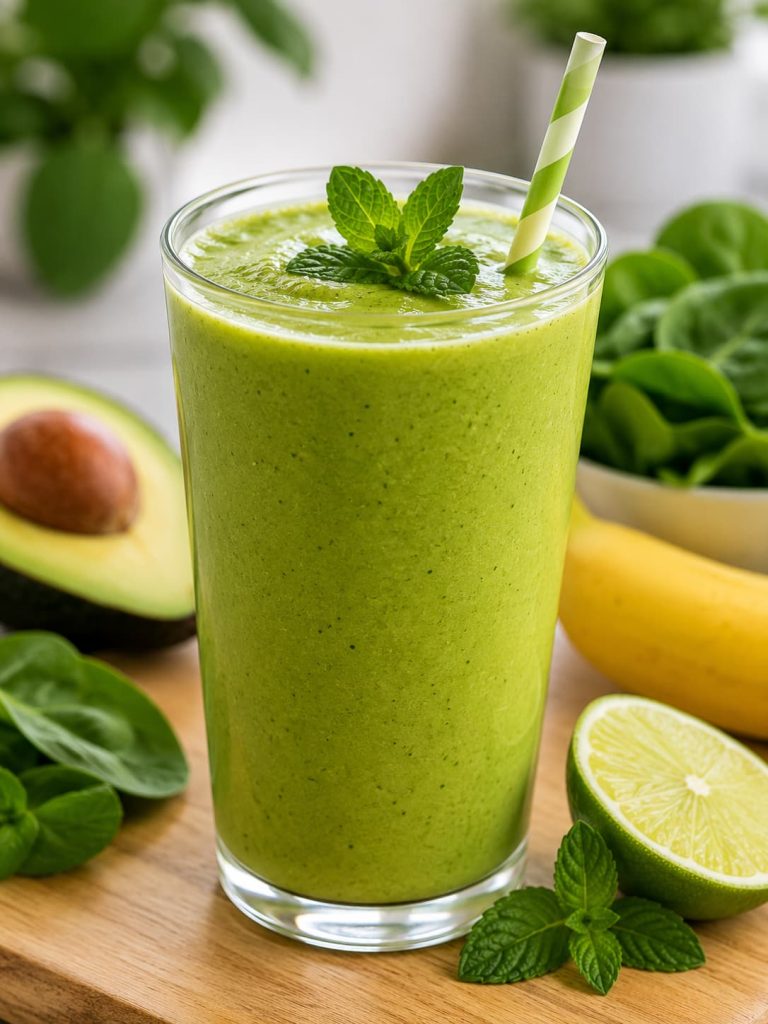
Counterintuitive but true: including healthy fat in a weight loss smoothie makes it more effective, not less. Avocado’s monounsaturated fats trigger the release of satiety hormones that tell your brain the meal is over — without the calorie density of processed foods. This smoothie is filling in a way that fruit-only blends simply can’t compete with.
What You’ll Need
- 🥑 ½ ripe avocado
- 🥬 2 handfuls fresh spinach
- 🍌 ½ frozen banana
- 🥛 1 cup unsweetened almond milk
- 🍋 Juice of ½ lime
- 🌿 Fresh mint (a few leaves)
- 🧊 ½ cup ice
How to Make It
- Add almond milk and lime juice to blender.
- Add spinach and blend 15 seconds with liquid.
- Scoop in avocado, add banana and mint.
- Top with ice and blend 60 seconds.
Pro Tip: The lime juice isn’t just flavor — it prevents the avocado from oxidizing and turning an unappetizing brown. Press plastic wrap directly against the surface of any leftovers to store, and drink within a few hours.
Optional Add-Ins: Scoop of unflavored protein powder, tablespoon of hemp seeds, ¼ tsp spirulina.
Calories + Benefits: ~320 calories, 12g protein. Healthy fats trigger satiety hormones; spinach provides iron and magnesium; avocado is rich in potassium and B vitamins. One of the best smoothies for sustained fullness.
6. The Blueberry Flaxseed Antioxidant Smoothie
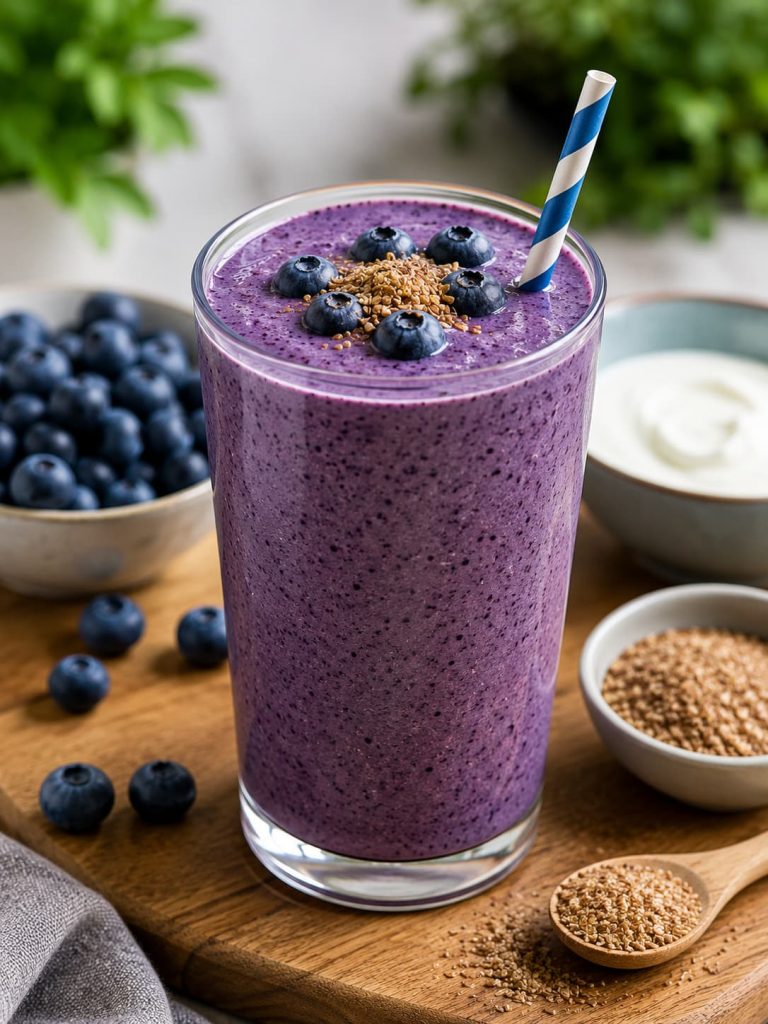
Flaxseed might be the most underrated ingredient in the weight-loss smoothie world. Two tablespoons add 4 grams of fiber, 4 grams of protein, and a meaningful dose of omega-3 fatty acids — all for roughly 70 calories. Combined with blueberries’ extraordinarily high antioxidant density, this smoothie actively reduces inflammation, which is increasingly linked to metabolic health and weight management.
What You’ll Need
- 🫐 1.5 cups frozen blueberries
- 🫚 2 tablespoons ground flaxseed
- 🥛 ¾ cup plain Greek yogurt
- 🥛 ½ cup unsweetened almond milk
- 🌿 ½ tsp vanilla extract
- 🍯 1 tsp honey (optional)
- 🧊 ½ cup ice
How to Make It
- Add almond milk and yogurt to blender.
- Add ground flaxseed and vanilla.
- Add blueberries and ice.
- Blend 45–60 seconds.
Pro Tip: Use ground flaxseed, not whole. Whole flaxseeds pass through your digestive system largely intact — you need them ground to actually absorb the omega-3s and fiber. Pre-ground is fine; just store in the fridge to prevent the oils from going rancid.
Optional Add-Ins: Scoop of vanilla protein powder, tablespoon of chia seeds, pinch of cinnamon.
Calories + Benefits: ~300 calories, 20g protein. Omega-3 fatty acids from flax, record-level antioxidants from blueberries, probiotics from yogurt. Excellent for metabolic health and anti-inflammatory support.
7. The Mango Turmeric Anti-Inflammatory Smoothie
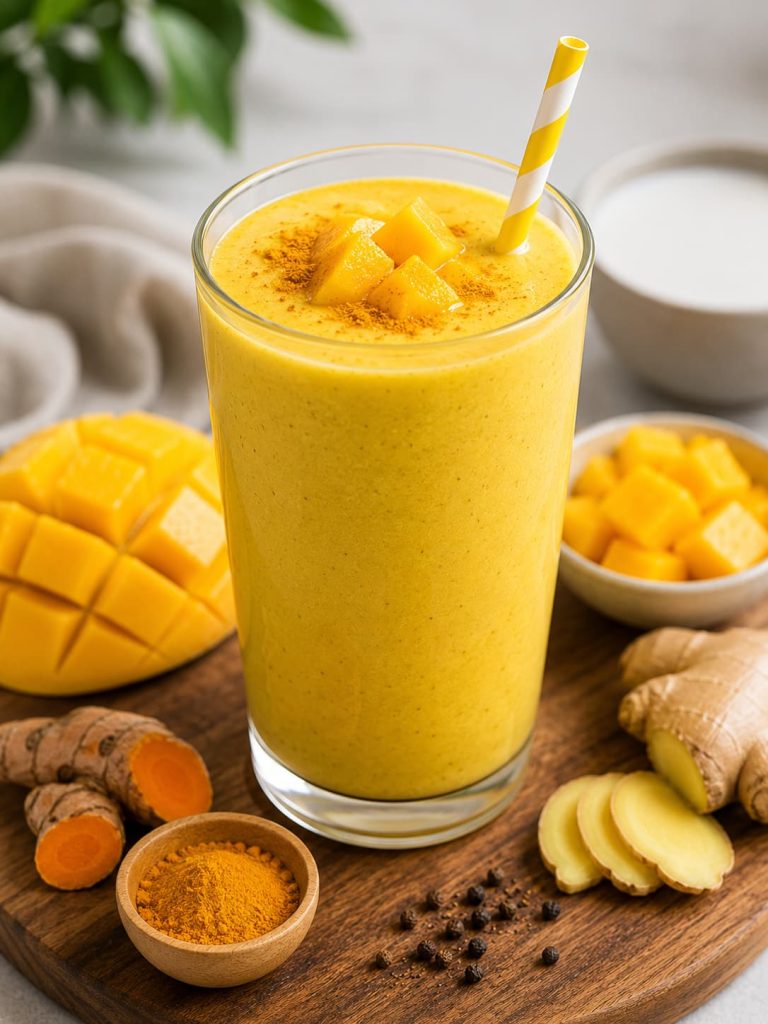
Inflammation is increasingly understood as a significant obstacle to weight loss — chronically elevated cortisol and inflammation make fat loss measurably harder. Turmeric is the most studied anti-inflammatory food compound in existence. Combined with mango’s natural sweetness and digestive enzymes, this smoothie tastes tropical and functions like medicine.
What You’ll Need
- 🥭 1.5 cups frozen mango
- 🫚 ½ tsp turmeric powder
- 🌿 ½-inch piece fresh ginger, peeled
- 🥛 1 cup coconut milk (light)
- 💪 1 scoop vanilla protein powder
- 🌶 Tiny pinch of black pepper
- 🧊 ½ cup ice
How to Make It
- Add coconut milk to blender.
- Add protein powder, turmeric, ginger, and black pepper.
- Add frozen mango and ice.
- Blend 60 seconds until completely smooth.
Pro Tip: Black pepper is not optional if you want the benefits of turmeric. Piperine in black pepper increases curcumin absorption by up to 2,000%. At the amount used here, you cannot taste it. Do not skip it.
Optional Add-Ins: Fresh pineapple (extra digestive enzymes), a tablespoon of coconut cream, collagen peptides.
Calories + Benefits: ~300 calories, 22g protein. Curcumin from turmeric for inflammation reduction; digestive enzymes from mango; anti-inflammatory gingerols. Excellent for anyone whose weight loss has plateaued.
8. The Chocolate Protein Superfood Smoothie
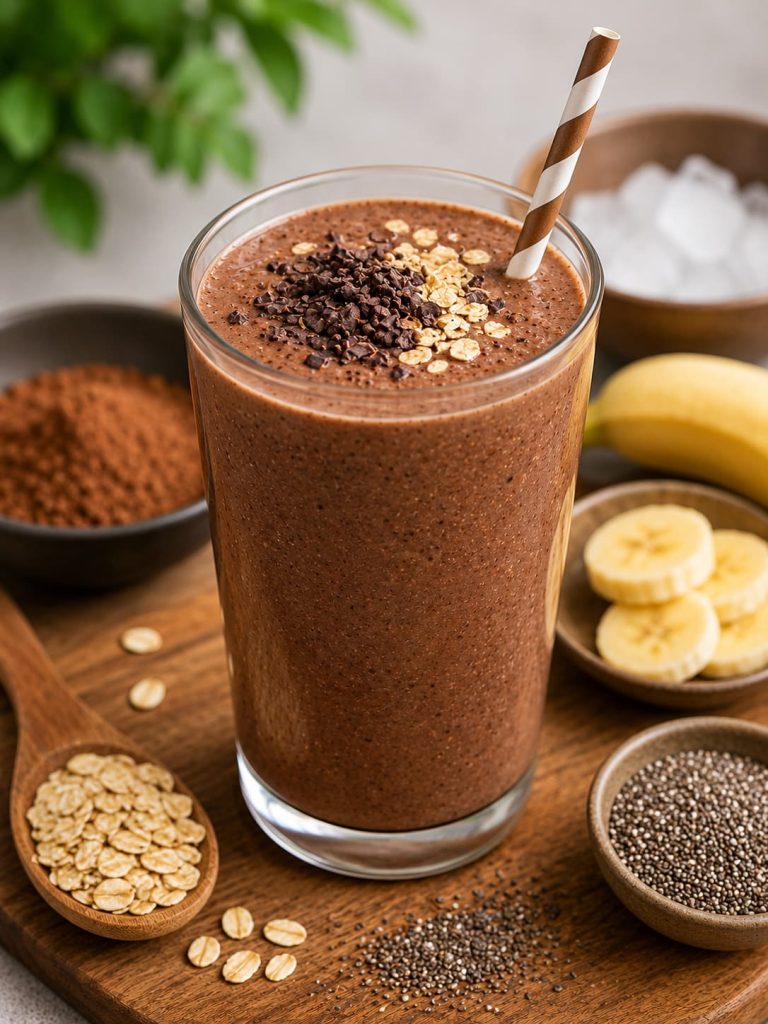
This is the one that will make you stop ordering those $14 smoothie bowls from places with exposed brick walls and artisanal everything. It tastes like chocolate mousse, it’s built like a meal, and it costs about $1.50 to make at home. Every person who’s tried this recipe has immediately asked for it in writing.
What You’ll Need
- 🍫 2 tablespoons raw cacao powder
- 🍌 1 frozen banana
- 💪 1 scoop chocolate protein powder
- 🥛 1 cup unsweetened almond milk
- 🫘 1 tablespoon chia seeds
- 🌾 2 tablespoons rolled oats
- 🧊 ½ cup ice
How to Make It
- Add almond milk to blender.
- Add cacao powder, protein powder, and oats.
- Add chia seeds, banana, and ice.
- Blend 60–90 seconds — the oats need full processing time.
Pro Tip: Use raw cacao, not Dutch-process cocoa. Raw cacao retains its antioxidant profile (cocoa processing destroys up to 90% of the beneficial compounds) and has a richer, less bitter flavor.
Optional Add-Ins: Tablespoon of almond butter if you want extra fullness, pinch of cayenne for a metabolism kick, tablespoon of coconut cream.
Calories + Benefits: ~380 calories, 30g+ protein. High fiber from oats and chia, magnesium from cacao, complex carbs for sustained energy. The most filling smoothie on this list — genuinely meal-level satiety.
9. The Peach Ginger Metabolism Booster
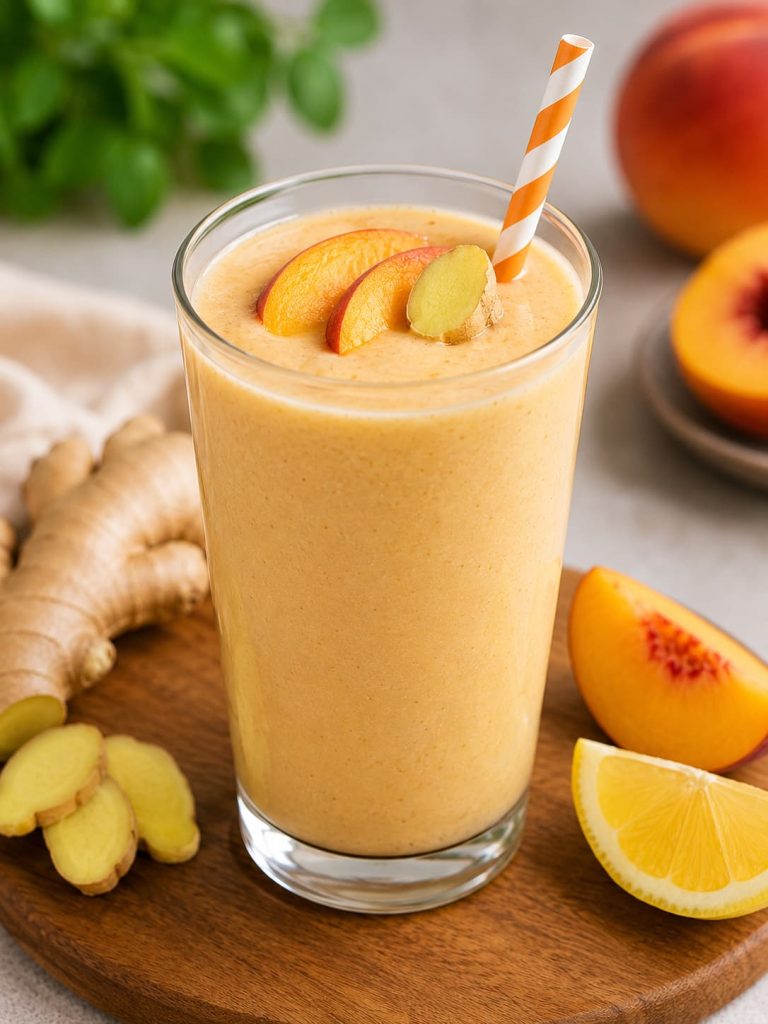
Peaches are underused in weight loss smoothies, and they shouldn’t be. They’re low in calories, high in vitamins A and C, and naturally sweet enough that you won’t need to add anything to hit a satisfying flavor. Paired with ginger’s thermogenic properties — it genuinely raises body temperature and boosts metabolism slightly — this is a light but functional smoothie that supports rather than hinders fat loss.
What You’ll Need
- 🍑 1.5 cups frozen peach slices
- 🌿 1-inch piece fresh ginger, peeled
- 🥛 ¾ cup plain Greek yogurt
- 🥛 ½ cup unsweetened almond milk
- 🍋 Juice of ½ lemon
- 🍯 1 tsp honey (optional — taste your peaches first)
- 🧊 ½ cup ice
How to Make It
- Add almond milk and yogurt to blender.
- Add ginger and lemon juice.
- Add frozen peaches and ice.
- Blend 60 seconds on high.
Pro Tip: Don’t peel fresh ginger — the peel is edible, and the blender handles it completely. Just scrub the outside and cut off any dry or very rough ends. It saves you 2 minutes of fussy prep.
Optional Add-Ins: Scoop of vanilla protein powder, pinch of cinnamon (excellent with peach), tablespoon of hemp seeds.
Calories + Benefits: ~240 calories, 16g protein. One of the lowest-calorie recipes on this list. Peaches are rich in chlorogenic acid, linked to fat metabolism. Ginger’s thermogenic effect is small but real. A light, functional choice for lower-calorie days.
10. The Cottage Cheese Berry Smoothie
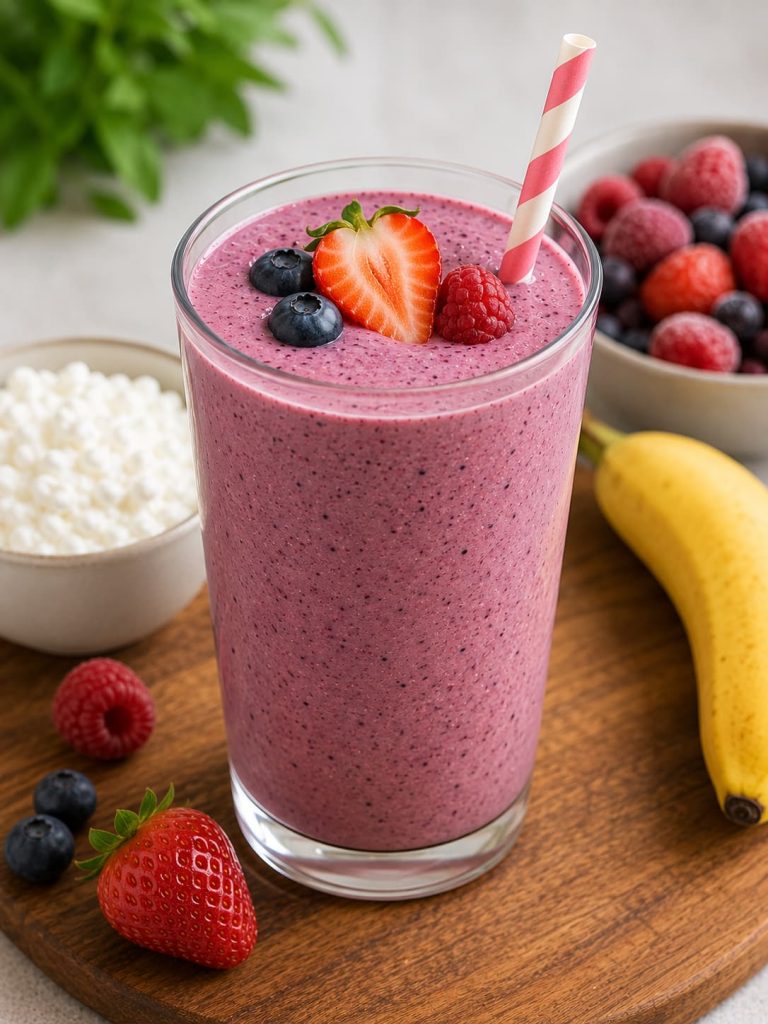
Cottage cheese in a smoothie sounds like a dare. It isn’t. Blended, it becomes completely smooth — indistinguishable from Greek yogurt — and it brings a protein content that competes with protein powder. A ¾ cup serving has 17–20 grams of protein. If you haven’t tried it yet, this is the recipe that will convert you.
What You’ll Need
- 🧀 ¾ cup low-fat cottage cheese
- 🍓 1 cup frozen mixed berries (strawberries, blueberries, raspberries)
- 🍌 ½ frozen banana
- 🥛 ½ cup unsweetened almond milk
- 🌿 ½ tsp vanilla extract
- 🧊 ½ cup ice
How to Make It
- Add almond milk to blender.
- Spoon in cottage cheese and vanilla.
- Add frozen berries and banana.
- Top with ice and blend 60 seconds.
Pro Tip: Blend the cottage cheese with the almond milk alone for 20 seconds before adding everything else. It ensures a completely smooth base without any lumpy pockets — which is the only thing standing between cottage cheese skeptics and converting them permanently.
Optional Add-Ins: Tablespoon of ground flaxseed, scoop of protein powder if you want to push protein even higher, fresh lemon zest for brightness.
Calories + Benefits: ~280 calories, 22–25g protein. Exceptional protein density for the calorie count. Cottage cheese is high in casein protein — slow-digesting, which means extended satiety and muscle-preservation benefits during a calorie deficit.
11. The Spinach Apple Detox Smoothie
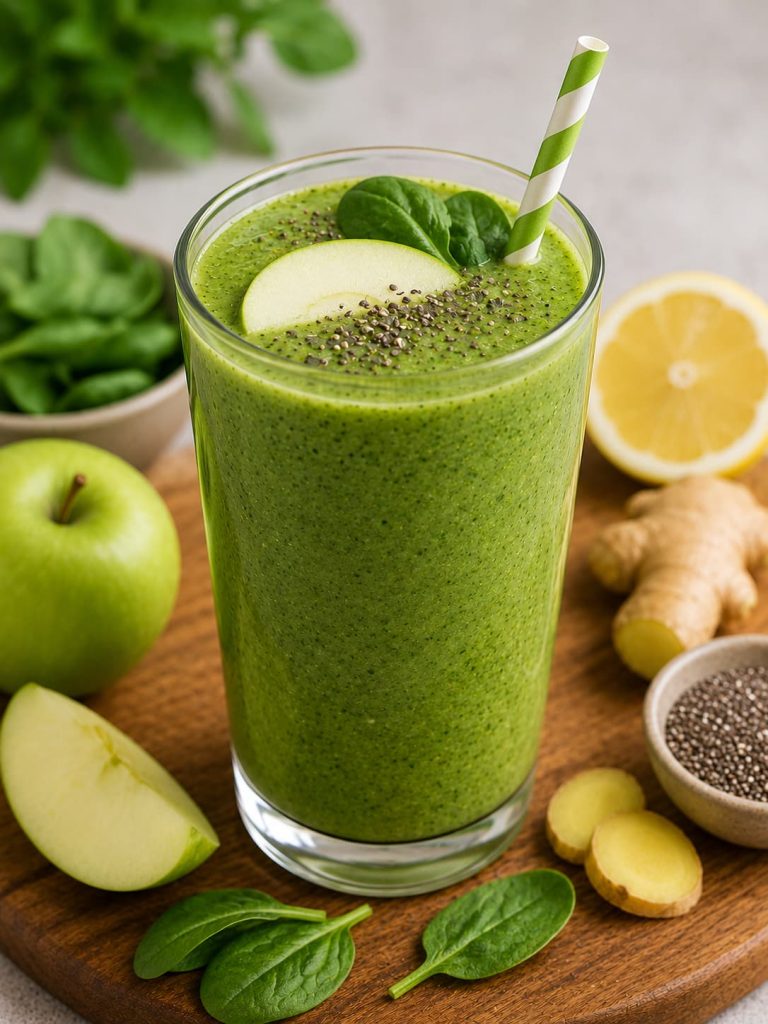
Apple, spinach, lemon, and ginger — clean, bright, and refreshingly non-sweet. This is the smoothie I reach for when I’ve had a heavy weekend and want something that feels like a reset. It’s low calorie, high fiber, and contains none of the things that slow weight loss down. Not technically a “detox” in the medical sense — but it will make you feel clean and light in a way that’s completely earned.
What You’ll Need
- 🍏 1 medium green apple, cored and roughly chopped
- 🥬 2 large handfuls spinach
- 🍋 Juice of 1 lemon
- 🌿 1-inch piece fresh ginger
- 🥛 1 cup coconut water
- 🫘 1 tablespoon chia seeds
- 🧊 ½ cup ice
How to Make It
- Pour coconut water into blender.
- Add spinach and blend 15 seconds with liquid.
- Add apple, lemon juice, ginger, and chia seeds.
- Add ice and blend 60 seconds.
Pro Tip: Leave the apple skin on. The skin contains a significant portion of the fiber and quercetin (an anti-inflammatory flavonoid) — and the blender handles it completely.
Optional Add-Ins: A scoop of unflavored protein powder to bring up protein content, fresh cucumber (refreshing and hydrating), a tablespoon of almond butter if you want extra satiety.
Calories + Benefits: ~200 calories, 8g protein (add protein powder to reach 25g). One of the lowest-calorie smoothies on this list. High in fiber, rich in antioxidants, genuinely hydrating. Best for lower-calorie days or as a between-meal option rather than a full meal replacement.
12. The Cinnamon Roll Protein Smoothie
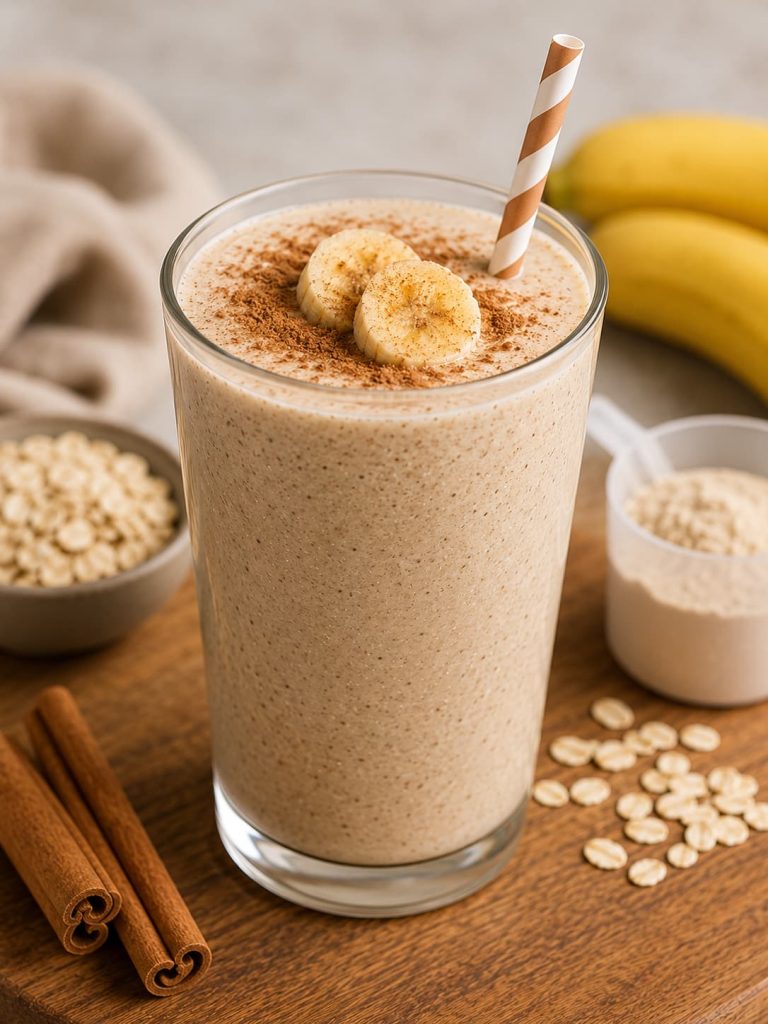
The one that makes weight loss feel like a sustainable lifestyle rather than a punishment sentence. This tastes like dessert — cinnamon, vanilla, oats, banana — and it hits 25 grams of protein with the calorie count of a light lunch. This is the recipe that keeps you from “rewarding yourself” with something that undoes your whole week.
What You’ll Need
- 🍌 1 large frozen banana
- 💪 1 scoop vanilla protein powder
- 🌾 ¼ cup rolled oats
- 🥛 1 cup unsweetened almond milk
- 🌿 1 tsp cinnamon
- 🌿 ½ tsp vanilla extract
- 🍯 1 tsp maple syrup
- 🧊 ½ cup ice
How to Make It
- Add almond milk to blender.
- Add oats and blend with milk for 15 seconds.
- Add protein powder, cinnamon, vanilla, and maple syrup.
- Add banana chunks and ice.
- Blend 60 seconds on high.
Pro Tip: A small pinch of nutmeg alongside the cinnamon takes this from “nice” to genuinely good. The two spices together create a warm, bakery-adjacent flavor that makes it taste far more indulgent than it is.
Optional Add-Ins: Tablespoon of almond butter (more filling, slightly higher calorie), tablespoon of ground flaxseed, a few drops of butter extract for an amplified cinnamon-roll effect.
Calories + Benefits: ~350 calories, 25–28g protein. High protein for satiety and muscle preservation. Complex carbs from oats and banana for sustained energy. The psychological win of eating something that tastes indulgent while staying within your goals is genuinely underrated.
Common Smoothie Mistakes That Stall Weight Loss
Even well-intentioned smoothie habits can accidentally work against your goals. Here are the ones to actively avoid:
Making it a fruit bomb. Three fruits, fruit juice as a base, and a drizzle of honey = potentially 60–80 grams of sugar in a single drink. Stick to one serving of fruit and balance it with protein and fiber.
Not counting liquid calories. “It’s just a smoothie” is how people accidentally drink 800 calories at breakfast. Know your portions. Measure your nut butter (100 calories per tablespoon). Build your smoothie intentionally.
Skipping protein. Without protein, a smoothie raises your blood sugar and crashes it, leaving you hungry faster than you started. Every recipe in this article is designed to avoid this — but if you’re building your own, minimum 15g protein every time.
Using too much ice. Ice adds bulk without nutrition and dilutes flavor, leading you to add sweetener to compensate. Use frozen fruit instead — it chills, thickens, and flavors simultaneously.
Drinking as an addition, not a replacement. Weight loss smoothies work as meal replacements, not supplements to a full breakfast. Drink one instead of breakfast — not alongside eggs, toast, and a pastry.
🛒 Smoothie Tools That Actually Matter
The right tools make a measurable difference in both results and consistency. Here’s what I actually recommend:
Best for: people blending every day who want professional results without compromise. Leafy greens, fibrous vegetables, frozen fruit, oats — the Vitamix handles all of it in under 60 seconds with zero texture issues. If smoothies are a long-term habit, this is the investment that pays for itself.
Ninja BL660 Professional Blender
Best for: families or people making larger batches. The 1100-watt motor handles every recipe in this article without hesitation, and the 72 oz pitcher gives you room for 2–3 servings. Best mid-range blender for the money, consistently.
NutriBullet 600W Personal Blender
Best for: solo smoothie drinkers who need speed and zero cleanup. Blend directly in the cup, flip a lid on it, and go. It handles all 12 recipes in this article as long as you prep your frozen ingredients properly.
Best for: people who like to take their smoothie on the go or store overnight prep. Glass keeps flavors cleaner than plastic, and these seal tightly enough to shake well before drinking.
Best for: anyone making thick, fiber-rich smoothies. Standard straws don’t cut it for chia seed or flaxseed smoothies — wide-bore reusable straws handle them without issue and come with a cleaning brush.
Best for: every single person making weight loss smoothies. 10 grams of fiber and 5 grams of protein per 2 tablespoons. Completely tasteless, store for months in the pantry, and work in every recipe here. Non-negotiable pantry staple.
Best for: people who love peanut butter flavor but want to reduce calorie density. Peanut butter powder has about 85% fewer calories than regular peanut butter while delivering very similar flavor. Great swap when you’re in a calorie-conscious phase.
The Habit Is What Actually Creates Results
Making one great weight loss smoothie on Monday is easy. Making 12 different ones over the next three weeks — with the right ingredients always stocked, a plan for what you’re making, and enough variety to stay motivated — is where real results happen.
That’s exactly what the 21-Day Smoothie Plan is built for. It maps out 21 days of smoothie recipes tailored to weight loss goals, gives you organized shopping lists so you’re never missing an ingredient, and provides enough variation that breakfast never feels like a diet. It’s not about restriction — it’s about having a system that makes the healthy choice the easy choice, every single morning.
I used it during a stretch where I wanted to lose 8 pounds before a vacation. I wasn’t miserable. I wasn’t hungry. And it worked.
→ Grab the 21-Day Smoothie Plan and make weight loss feel sustainable. Because consistency beats perfection every single time.
Weight Loss Smoothie FAQ
Can smoothies actually help me lose weight? Yes — when used correctly as meal replacements, not additions to existing meals. The key is keeping protein high (15g+), added sugar low, and total calories intentional (250–400 per meal replacement). Every recipe in this article is built to those specs.
Can I make these ahead of time? Most store well in a sealed jar for 12–24 hours. Smoothies with avocado or fresh citrus are best drunk immediately. For maximum convenience, prep smoothie packs — pre-portion your frozen ingredients into zip-lock bags and freeze. Dump the bag into the blender with your liquid in the morning — breakfast in 90 seconds.
What’s the healthiest liquid base for weight loss? Unsweetened almond milk (30 calories per cup) or plain water are your lowest-calorie options. Coconut water is good for electrolytes. Avoid juice entirely as your base — it removes fiber and adds sugar without satiety. Whole milk is fine if you want extra protein and fat; just account for the calories.
How much protein should a weight loss smoothie have? Aim for at least 15 grams per serving — ideally 20–25g if it’s replacing a full meal. Greek yogurt, protein powder, cottage cheese, and hemp seeds are your best tools. Under 15g and you’re likely to be hungry again within 2 hours.
Are these smoothies safe to drink every day? Yes, especially the ones built around whole food protein sources rather than just powder. Vary which ones you make to get a range of nutrients. If you’re relying on protein powder daily, make sure you’re also getting micronutrients from fruits, greens, and seeds.
What blender works best for thick, high-fiber smoothies? The Vitamix is the gold standard for smoothies with chia seeds, flaxseed, oats, and leafy greens — it processes everything completely. The Ninja BL660 is excellent and more affordable. The NutriBullet works well for single servings without oats.
Which smoothie is best for beginners? The Strawberry Greek Yogurt Slimmer (Recipe #2) — familiar flavors, simple ingredients, no unusual additions, and one of the highest protein-to-calorie ratios on the list. Make that one first, then branch out.
Your 12-Recipe Weight Loss Arsenal Is Ready
These weight loss smoothies work because they’re engineered to keep you full, hit your nutritional targets, and — critically — taste good enough that you actually want to make them again tomorrow. That last part is what most diet advice gets completely wrong.
The best weight loss plan is the one you stick to. And you’ll stick to these.
If you want a full three-week framework that takes all the planning off your plate, the 21-Day Smoothie Plan is the structured support that keeps the habit alive well past day one.
Now tell me — which of these 12 weight loss smoothies is going into your blender first? The chocolate protein one (Recipe #8), or are you going straight to the cinnamon roll (Recipe #12)? Drop your pick in the comments — I want to know!