
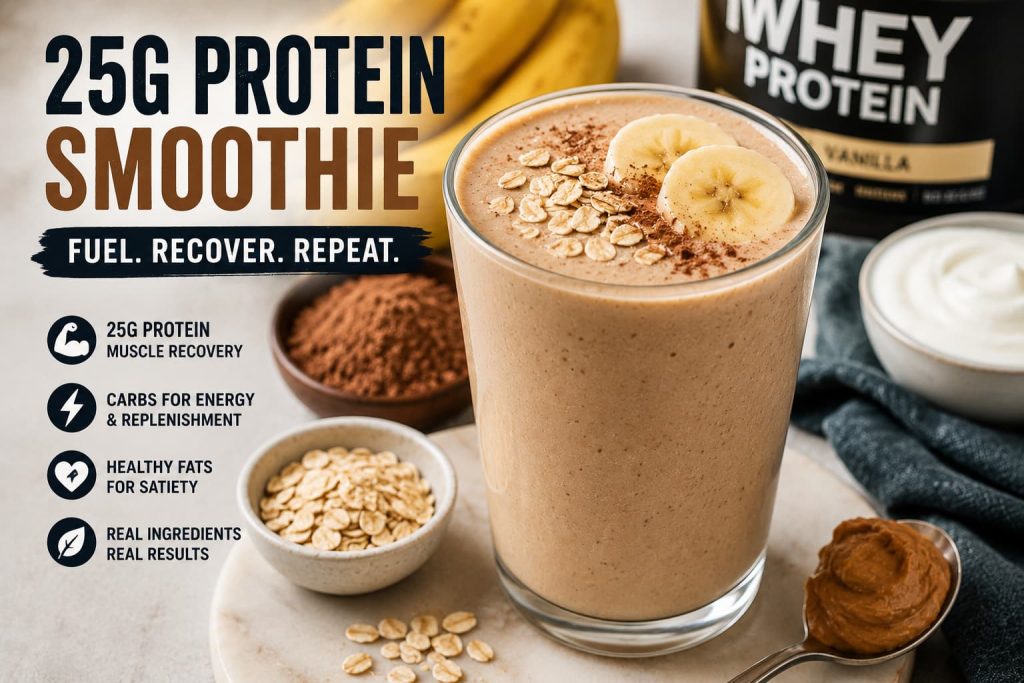
For a long time, my post-workout protein situation was a disaster. I'm talking grainy chocolate powder dumped into water, shaken aggressively in a sad little plastic bottle, consumed with the enthusiasm of someone taking medicine. It technically worked. It tasted like I was being punished.
Then I started treating my protein shake like an actual recipe — real ingredients, real thought, five extra minutes — and the whole experience changed. What I landed on is a 25-gram protein smoothie that I now make religiously every single week without fail. Not because I have to. Because I actually want to.
It's thick, it's rich, it genuinely tastes good, and it hits every nutritional target I care about: protein for muscle recovery, carbs for glycogen replenishment, and healthy fats to keep me full and support absorption. This is not a "health food that's fine if you hold your nose" situation. This is a protein smoothie recipe that competes with real food — and sometimes wins.
Here's exactly how to make it.
Not all high-protein smoothies are created equal. Here's why this specific combination consistently delivers.
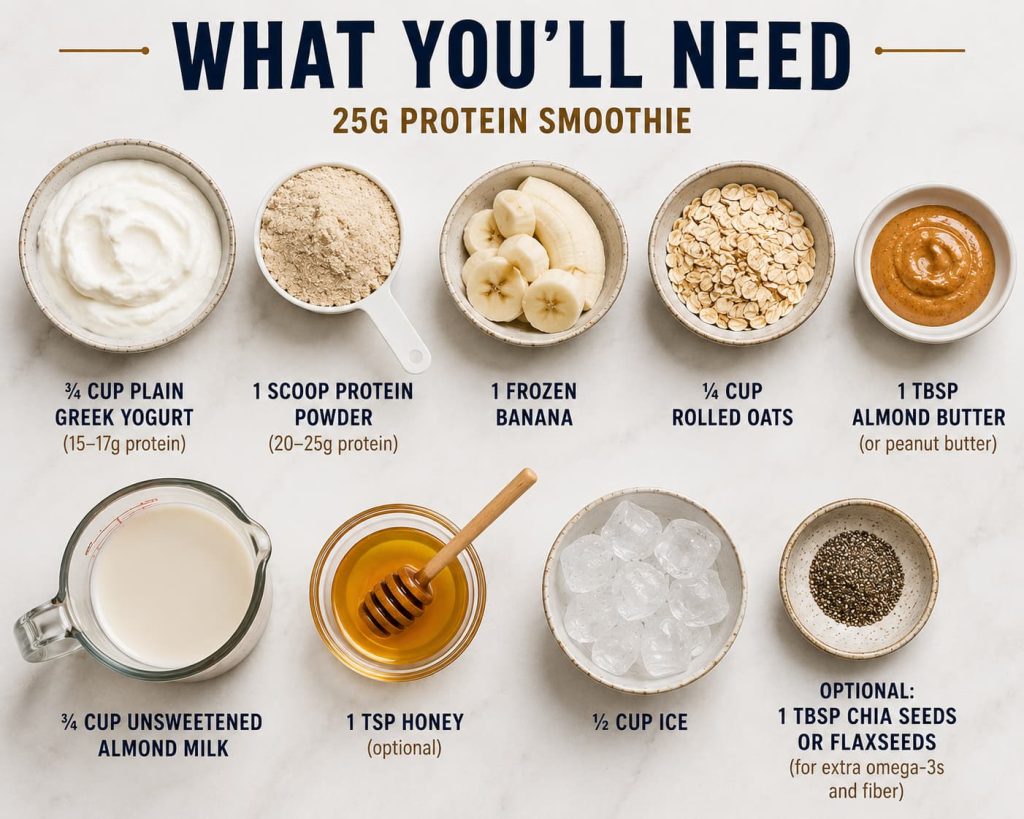
The protein source matters. This recipe uses Greek yogurt and protein powder — not because more is always better, but because they serve different functions. Greek yogurt provides casein protein, which digests slowly and keeps you in a muscle-repair window longer. Protein powder gives you fast-absorbing whey (or plant-based if you prefer) that hits your muscles quickly post-workout. Together, they create a sustained protein delivery that a single-source shake can't match.
Carbs are not the enemy here. The banana and oats in this recipe provide complex carbohydrates that replenish glycogen stores after training. If you're skipping carbs post-workout "to stay lean," you're actually slowing down recovery. Feed your muscles what they need to rebuild.
Healthy fats seal the deal. Almond butter adds monounsaturated fats that support hormone production, improve satiety, and — critically — help your body absorb the fat-soluble vitamins you're taking in. One tablespoon. That's it. It makes a bigger difference than you'd expect.
The biggest mistake in protein smoothies? Relying on powder alone and skipping whole-food ingredients. Powder is a supplement — it supplements real food, not the other way around.
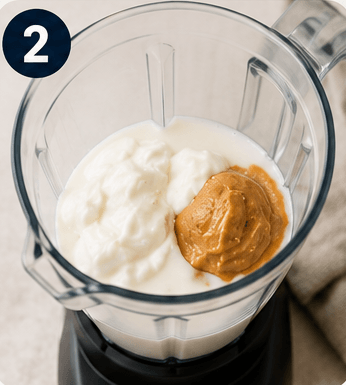
2. Spoon in the Greek yogurt and almond butter next.
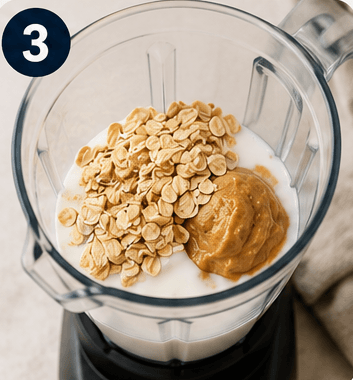
3. Add the oats. Yes, raw. They blend down perfectly and add thickness without cooking anything.
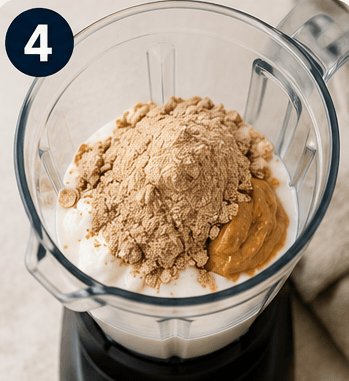
4. Add the protein powder — tap it in gently rather than dumping from height so you don't create a protein powder cloud in your kitchen. Ask me how I know.
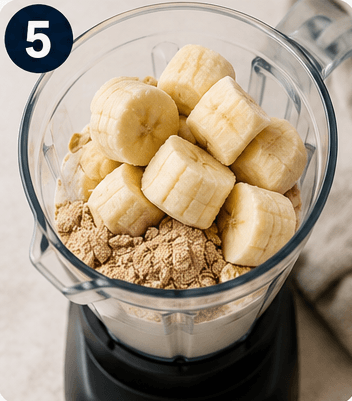
5. Break the frozen banana into chunks and add it.
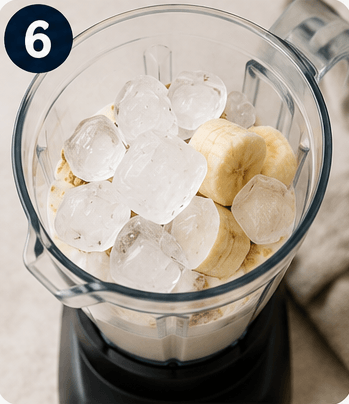
6. Pile the ice on top.
7. Blend on high for 60–90 seconds. The oats need full processing time or you'll get a gritty texture.
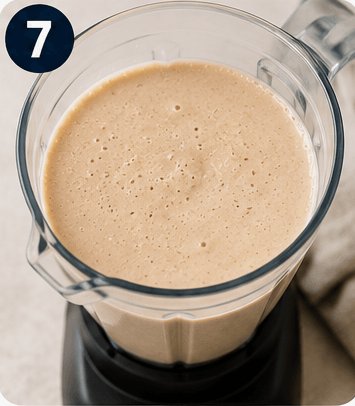
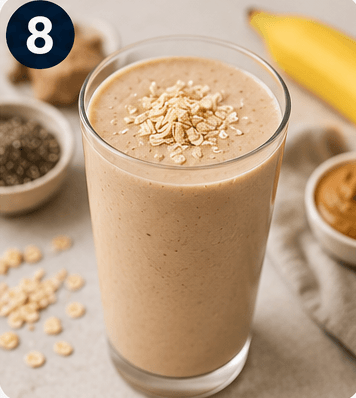
8. Check consistency. This should be thick — like a very full milkshake. If it's too thick to blend properly, add almond milk one tablespoon at a time.
9. Taste and adjust sweetness. A good ripe banana usually handles it on its own.
Pro tip: Blend the oats and liquid alone for 20 seconds before adding everything else. This pre-breaks the oat fiber and results in a dramatically smoother final texture. Worth the extra step.
Once you've nailed the base, these tweaks keep the routine from getting stale.
🍫 Chocolate Peanut Butter Power — Use chocolate protein powder, swap almond butter for peanut butter, and add 1 tablespoon of raw cacao powder. Tastes exactly like a Reese's cup decided to become a gym rat. This is the variation that converts skeptics.
🍓 Berry Recovery Smoothie — Add ½ cup frozen mixed berries and use vanilla protein powder. The antioxidants in berries actively support muscle recovery by reducing oxidative stress from training — this isn't just flavor, it's function. Plus it turns a gorgeous deep purple.
🌿 Green Muscle Builder — Add a big handful of spinach, 1 tablespoon of hemp seeds (3g extra protein each tablespoon), and a small piece of fresh ginger. The banana and protein powder completely mask the spinach flavor. You get 28+ grams of protein and a full serving of greens. IMO this is the most underrated combination in the lineup.
☕ Espresso Protein Wake-Up — Add ½ cup cold brew coffee in place of half the almond milk. Chocolate protein powder recommended here — mocha smoothie, zero effort. This one is particularly good on heavy training days when you need both caffeine and nutrition to hit at the same time.
🍍 Tropical Protein Blend — Replace the banana with ½ cup frozen pineapple and ½ cup frozen mango, and use coconut milk instead of almond milk. Lighter in texture, still high in protein, feels like a completely different drink. Great if you're tired of the banana base.
Protein powder + oats + frozen banana is a serious blending challenge. Get this wrong and you have a lumpy, gritty shake that kills your motivation. Here's the gear that handles it properly:
This is the only blender that fully pulverizes oats into a completely smooth texture in one pass. The motor power is in a different league — and for a protein smoothie with multiple dense ingredients, that matters. If you blend protein smoothies daily, the Vitamix is your machine.
Ninja BL660 Professional Blender
The Ninja is an excellent choice for this recipe — the 1100-watt motor handles oats and frozen banana well, and the 72 oz pitcher gives you room to make a double batch. Great mid-range option with real power where it counts.
NutriBullet 600W Personal Blender
For a single-serve protein smoothie with no oats (or pre-blended oat flour), the NutriBullet works well. It's quick, compact, and you drink directly from the blending cup — which means zero cleanup after a hard workout. That convenience is underrated.
Add flavor depth without extra calories or sugar. The caramel syrup turns the chocolate peanut butter variation into something genuinely special — a drizzle on top is all you need. The vanilla is also great for balancing a too-strong protein powder taste.
Here's the thing about protein smoothies: making a great one post-workout is straightforward. Doing it consistently — week after week, through busy days and low-motivation mornings — is where most people fall off.
The 21-Day Smoothie Plan is what turned this from a "sometimes I do this" habit into an automatic part of my training week. It gives you 21 days of smoothie recipes mapped to nutritional goals, organized shopping lists, and enough variety that you don't hit a wall and quit. It's the difference between a great recipe and an actual system.
→ Get the 21-Day Smoothie Plan and build the habit that makes the results. Consistency beats perfection every time — this plan makes consistency easy.
Can I prep protein smoothies ahead of time? Yes — store in a sealed jar in the fridge for up to 24 hours. The texture may thicken as the oats continue to absorb liquid; just shake well or add a splash of almond milk before drinking. Don't store for longer than a day or the texture starts to suffer noticeably.
What's the best protein powder for smoothies? Whey isolate blends smoothest and has the least "protein powder" aftertaste. For plant-based options, pea protein is the closest in texture. Avoid mass gainer powders — they add unnecessary carbs and sugar that shift the macros you're working with.
Can I use cottage cheese instead of Greek yogurt? Absolutely, and it's worth trying. Cottage cheese is slightly higher in protein and blends into a very smooth texture that surprises most people. Use the same quantity as the yogurt.
Is this suitable for weight loss? At roughly 400–500 calories depending on your protein powder, it's a meal replacement, not a snack. For weight loss, skip the honey, use a lower-calorie milk, and be mindful of portion size. But the high protein content is a huge asset — it keeps you full and preserves muscle while you're in a deficit.
Can kids drink this? With adjustments, yes. Use a child-appropriate protein source (full-fat yogurt rather than protein powder, which isn't designed for kids), skip the coffee variation, and reduce the portion size. The chocolate peanut butter version is genuinely kid-approved.
This protein smoothie isn't a compromise. It's not "health food you endure." It's 25 grams of protein, real whole-food ingredients, and a flavor that makes you look forward to the part of your day you're supposed to be fueling. Make it once and I'd be shocked if it's not in your regular rotation by the end of the week.
For 20 more mornings and post-workout moments exactly like that, the 21-Day Smoothie Plan has everything mapped out and ready to go.
Now tell me — are you team chocolate peanut butter or team espresso protein? Drop your answer below — I need to know who my people are! 💪
This creamy 25g protein smoothie is the ultimate post-workout fuel — thick, satisfying, and packed with real ingredients that actually support recovery. Made with Greek yogurt, protein powder, oats, almond butter, and banana, it delivers the perfect balance of protein, healthy fats, and complex carbs to keep you energized and full for hours. Whether you're refueling after the gym, replacing breakfast, or trying to hit your protein goals without choking down a bland shake, this smoothie tastes like a treat while working like a recovery meal.
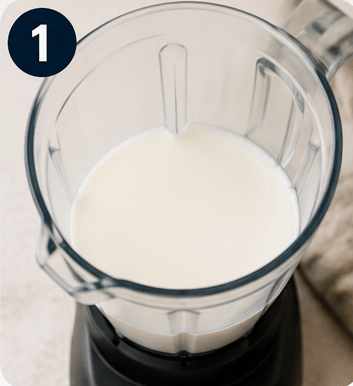
Add almond milk to the blender first — always liquid before solids for a smoother blend.
Spoon in the Greek yogurt and almond butter next.
Add the oats. Yes, raw. They blend down perfectly and add thickness without cooking anything.
Add the protein powder — tap it in gently rather than dumping from height so you don't create a protein powder cloud in your kitchen. Ask me how I know.
Break the frozen banana into chunks and add it.
Pile the ice on top.
Blend on high for 60–90 seconds. The oats need full processing time or you'll get a gritty texture.
Taste and adjust sweetness. A good ripe banana usually handles it on its own.


